

Branding Measurement Metrics: From Awareness to Lifetime Value and Revenue Impact
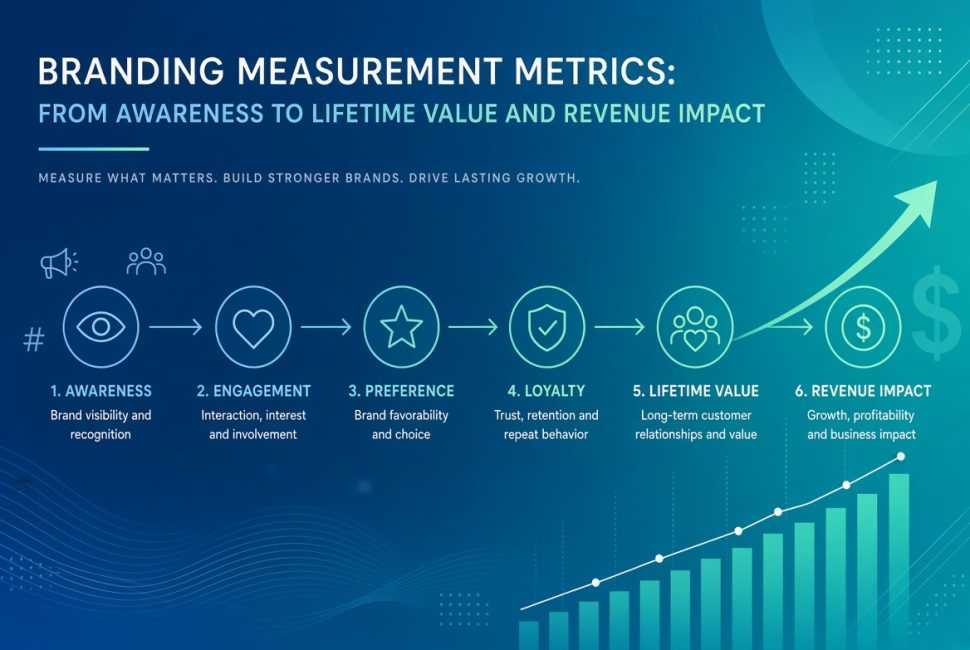
Branding matters for more than recognition or shaping how a business appears to customers. For companies in professional services and beyond, the true value of branding measurement metrics lies in how clearly they demonstrate impact on revenue and customer lifetime value. Today, marketing leaders must prove marketing’s worth by connecting brand investment to concrete business outcomes that reach well beyond initial awareness.
Rethinking branding measurement: From legacy KPIs to financial strategy
Branding metrics have traditionally focused on broad awareness benchmarks like brand recall and unaided awareness. These data points reveal whether customers know and recognise a company, but they are limited in predicting or explaining financial performance. Shifting commercial pressures and the need for precise marketing accountability have led organisations, especially in professional services, to modernise measurement systems. Now, brand strategy is closely mapped to business results such as pricing power, client retention and revenue per client, challenging marketing functions to re-define what success means.
Brand measurement beyond awareness: Re-aligning priorities
How businesses have traditionally tracked brand performance
Brand tracking once relied almost exclusively on recognition rates, recall and positive sentiment. Survey-based research, media reviews and share of voice metrics told businesses how well their messages were noticed and received. These indicators helped guide awareness campaigns and provided a baseline, but rarely captured branding’s commercial value. As expectations for marketing’s contribution grew, attention turned to more rigorous measurement.
Aligning brand metrics with commercial goals
Marketing Eye Brisbane and other leaders in the industry now advocate for a broad suite of KPIs: Average deal size, retention rate, price elasticity and lead conversion sit beside awareness measures, tracing branding’s influence across the full sales cycle. This provides a richer understanding of how branding interacts with financial performance. For professional services, subtle variations in how a firm is perceived can drive large shifts in profitability, making accurate brand measurement indispensable.
Branding metrics revenue impact in practice
In services businesses where credibility and trust must be earned, the ability to command premium pricing or extend contracts hinges on the strength of the brand. Monitoring revenue indicators, like enhanced margin, upsell rates or reduced discounting, offers practical evidence that branding is delivering economic value, rather than serving as a cost centre. By presenting these direct links, marketing departments position themselves as strategic business partners.
From building awareness to capturing revenue: Measurable connections
Using branding to anchor pricing power
A respected brand makes price discussions less contentious. By assessing how often clients accept proposed fees versus requesting discounts, and by reviewing average deal sizes against industry norms, firms can quantify their brand’s contribution to value perception. Branding Eye Brisbane, leveraging this approach, encourages clients to plot historical pricing data, isolating effects of branding campaigns from broader market shifts. This arms marketers with fact-based narratives for senior management.
Measuring retention and client loyalty
Brand loyalty translates into recurring revenue and reduced new client acquisition costs. Firms track repeat business through metrics like average customer lifespan, contract renewal rates or percentage of returning clients. These indicators complement sales figures, revealing how branding keeps customers invested, helping smooth cash flow, drive referrals and underpin growth strategies built on trusted relationships.
Impact on sales performance and pipeline velocity
Brand reputation does not only open doors but accelerates the journey from enquiry to sale. By analysing sales funnel progression, conversion rates from lead to client and the average time in each pipeline stage, businesses can evaluate the extent to which branding facilitates faster or higher-value sales. This approach moves beyond surface impressions to observable improvements in business momentum.
Lifetime value branding: Understanding extended financial impact
Calculating and applying customer lifetime value (CLV)
Strong branding encourages longer, more profitable relationships. Customer lifetime value (CLV) multiplies the average transaction value, purchase frequency and retention period. When branding initiatives succeed, by positioning a business as expert, reliable or indispensable, CLV indicators improve across these vectors. Firms that invest in lifetime value branding are rewarded with predictable income and greater resilience to competitive pressures.
Long-term commercial benefits for professional services
For service-based businesses, trust and perceived quality underpin contracting decisions. Where branding strategies raise both, clients are more willing to sign longer contracts, refer new business and resist switching offers. Tracking cumulative revenue per client over years reveals the compounding effect: A difference that may outscale early acquisition costs many times over and shape the firm’s financial trajectory.
Integrating advanced branding metrics into marketing strategy
A reliance on standard awareness metrics overlooks the broad scope of branding’s commercial influence. Marketing Eye Brisbane advocates implementing marketing strategies built around branding KPIs that trace a direct path from reputation to financial results. These include metrics such as revenue-per-client, attrition and extension rates, and changes in average customer value following focused brand campaigns. Such alignment solidifies the marketing department’s role as a revenue centre within the broader business mix.
Key actions for marketers aiming to prove value
- Adopt financial KPIs: Go beyond awareness to include deal size, renewal rates, share of wallet and margins.
- Collaborate with sales and finance: Ensure marketing’s metrics are relevant for forecasting and profit tracking.
- Develop automated dashboards: Aggregate real-time data for quick reference and transparent performance review.
- Iterate campaigns based on measurable effects: Use metric trends to adapt creative and channel investment.
Tools and dashboards for effective brand ROI measurement
Transforming analytics with integrated technology
Contemporary measurement tools have shifted the burden from reactive reporting to continuous optimisation. CRM platforms, market analysis software and proprietary technology, such as Robotic Marketer by Marketing Eye Brisbane, combine traditional survey results with deal values, retention rates and other commercial indicators in one real-time dashboard. This seamless integration allows teams to spot emerging patterns, refine strategies, and communicate marketing’s value in financial terms.
Bridging branding to business impact visually
Well-designed dashboards present trends in client value, conversion efficiency and contract longevity, making branding’s revenue impact accessible to both marketers and business leadership. For financial and operational teams, this bridges the gap between creative marketing language and key business drivers such as profitability and long-term growth.
The new expectations for marketing in professional services
Businesses across the professional services sector require marketing departments to do more than shape perceptions. By selecting and reporting on branding metrics that span initial awareness, commercial performance and lifetime value branding, marketing leaders earn a more central seat at the strategy table. Benchmarked rigorously, these metrics guide not only campaign priorities but also business resource allocation and client account planning.
Deepening accountability and evidence-based practices
Marketing professionals face rising expectations to quantify return on investment. The shift to comprehensive branding metrics is not simply a trend; it reflects a broader commitment to data-driven, commercially relevant decision-making across service businesses. Research-backed KPIs that cross departmental lines empower marketers and executives alike to optimise resources, reduce risk, and achieve meaningful business growth.
Strengthening commercial performance through smarter branding measurement
Effective branding metrics function as more than indicators of awareness. They form a set of decision tools for leadership, clarifying where and how branding strengthens revenue, lifts margins, and secures long-term client relationships. Professional services organisations who embrace both classic and modern metrics ensure they remain competitive and resilient as customer and market expectations mature. Through investing in actionable measurement techniques and tools, firms cement their marketing strategy as a catalyst for lasting business value.